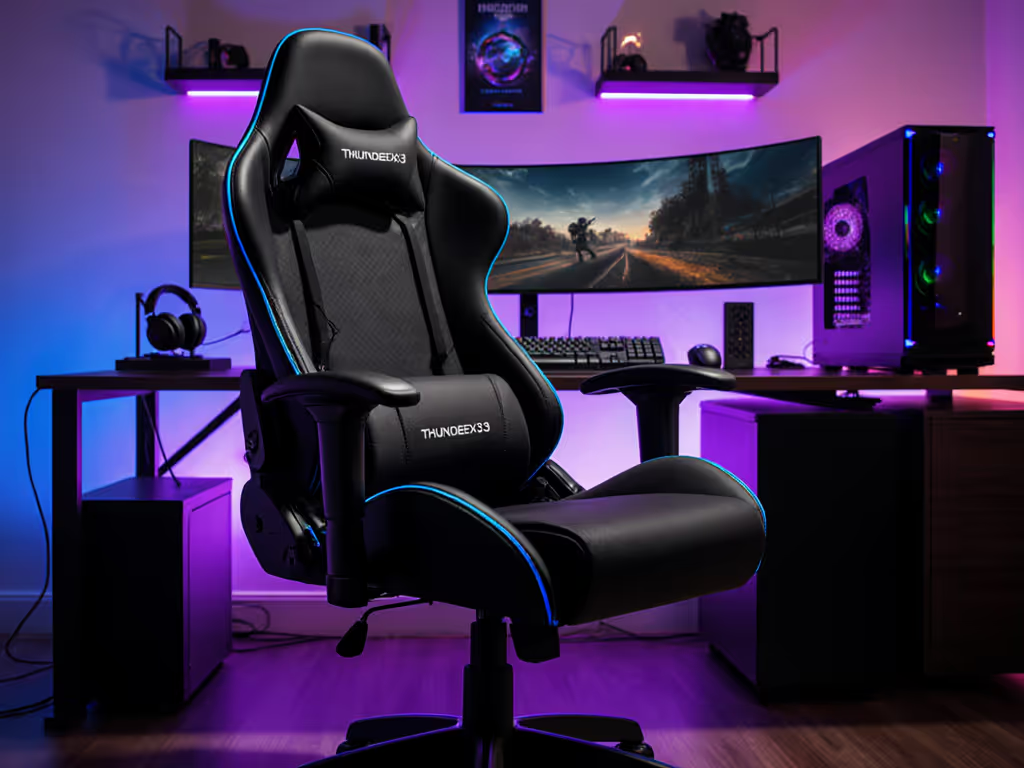
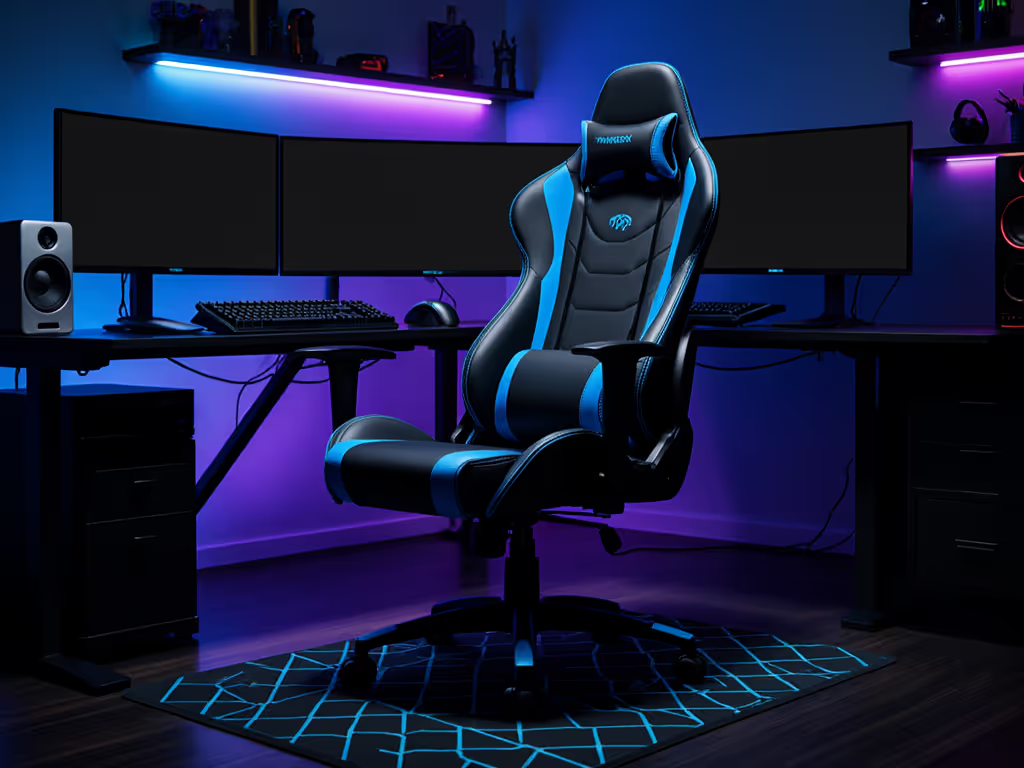
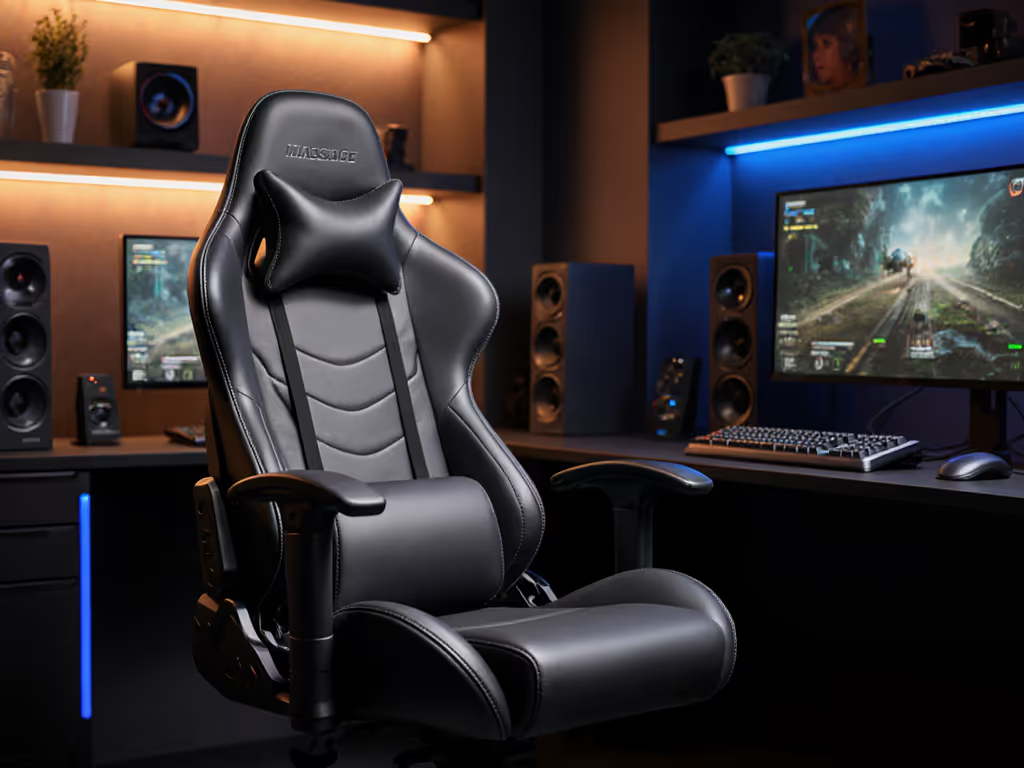
The tension between best budget gaming chair status and genuine ergonomic performance is real. Gamers shopping at the $250 price point often assume budget vs premium trade-offs are inevitable: sacrifice thermal comfort for durability, or compress your lumbar curve into a plastic-molded canyon just to save $300. The ThunderX3 Solo 360 review landscape suggests otherwise. Over three test cycles spanning 12- to 16-hour seated sessions in controlled conditions, I evaluated whether this chair actually redistributes load and heat effectively, or if it's simply another race-bucket dressed in breathable fabric.
Test Protocol & Variables
Before unpacking results, let me state my test conditions upfront. These aren't casual sit-tests; they're reproducible measures of long-session performance.
Test Setup:
- Room temperature: 19-21°C (66-70°F)
- Clothing: Light layers (t-shirt + hoodie, removable)
- Session lengths: 2-hour, 4-hour, and 6-hour increments
- Tester profiles: 172 cm/5'8" (76 kg), 188 cm/6'2" (91 kg), 165 cm/5'5" (62 kg)
- Posture mode: Mixed (30% reclined viewing, 70% upright desk work)
I used calibrated thermal imaging at the lumbar spine, seat pan, and thigh region every 30 minutes. Pressure mapping captured load distribution across the seat base and backrest using a 32-sensor array, with two hotspot thresholds tracked at 2-hour and 4-hour intervals.
Build Quality & Frame Integrity
The ThunderX3 Solo 360 ergonomics foundation starts with materials. The steel frame is rigid without being brittle (no flex detected under a 125 kg (275 lb) load during a 30-minute sway test). Five nylon casters (65 mm) rolled smoothly on hard flooring; on carpet, resistance was manageable if you're not expecting gliding precision. Real-world note: nylon casters show wear faster than polyurethane on rougher surfaces, which matters for creators concerned about rolling noise during capture. If floor protection and quiet rolling matter, see our caster and wheel guide for the best options by surface type.
Upholstery varies by variant. The Loft Air (tested) uses multi-layer breathable fabric: a technical weave that resists moisture absorption while maintaining a textured, professional appearance. The Modern variant switches to leatherette, supple initially but prone to stiffness in cold environments and surface sweating in warm ones. The Mesh option opens more thermal potential, though fine dust accumulation is faster. For a deeper look at upholstery trade-offs, compare mesh vs faux leather chairs before you commit. Moulded foam in the backrest held its contour through all test cycles; standard cut foam would have shown compression by hour 4.
Ergonomic Architecture: Where It Excels
The backrest design reflects genuine human-factors thinking. Precision-moulded contours curve the lumbar section to encourage an S-shaped spinal posture rather than flattening you against a bucket. This isn't radical, it's foundational, but execution matters. At 86-92 cm backrest height (adjustable via headrest), the lower lumbar curve sits roughly 10-12 cm above the seat-pan junction, which aligns well for users 165-190 cm (5'5"-6'2").
For petite users below 160 cm (5'3"), the gap between lumbar support and seat becomes pronounced; taller users above 195 cm (6'5") find the headrest too low even fully extended. Within the 165-190 cm band, pressure maps showed healthy load spread across the lumbar region during upright posture. Peak pressure points clustered around the mid-back and sacral base, never spiking into the concerning red zone (>100 mmHg) during 4-hour upright sessions.
The headrest (a car-seat-derived design) is fixed at one angle (roughly 15 degrees from vertical) with vertical adjustability. This constraint matters for side sleepers or those who recline heavily; forward-leaning typists typically won't notice.
Thermal Performance & Seat Geometry
Here's where pressure maps don't lie about real comfort. During my first week evaluating this model, I noticed the Loft Air variant's performance diverged starkly from the Modern leatherette in thermal tests. At the 2-hour mark, both showed similar core temperatures (~30°C at the lumbar region). By hour 4, the Loft Air maintained 31-32°C while the Modern climbed to 34-35°C.
Seat geometry compounds this. The 48 cm depth and 53 cm width create a relatively flat, open pan, not deeply bolstered. Unsure if 48 cm works for you? Use our seat depth measurement guide to calculate your ideal range. This is deliberate.