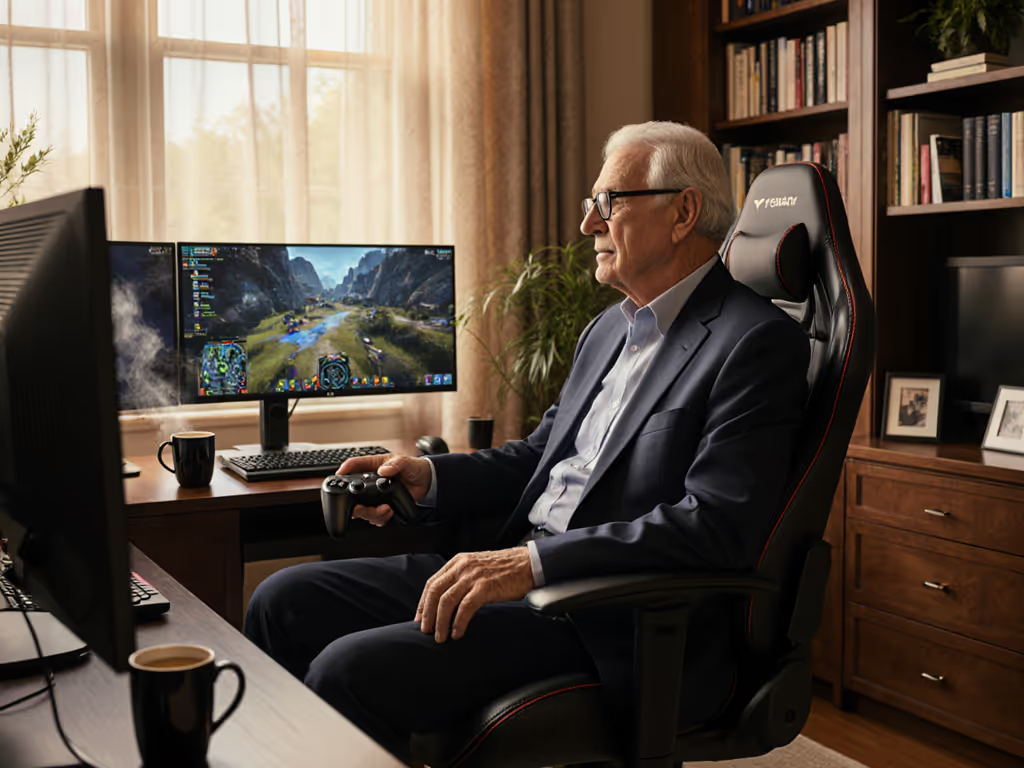
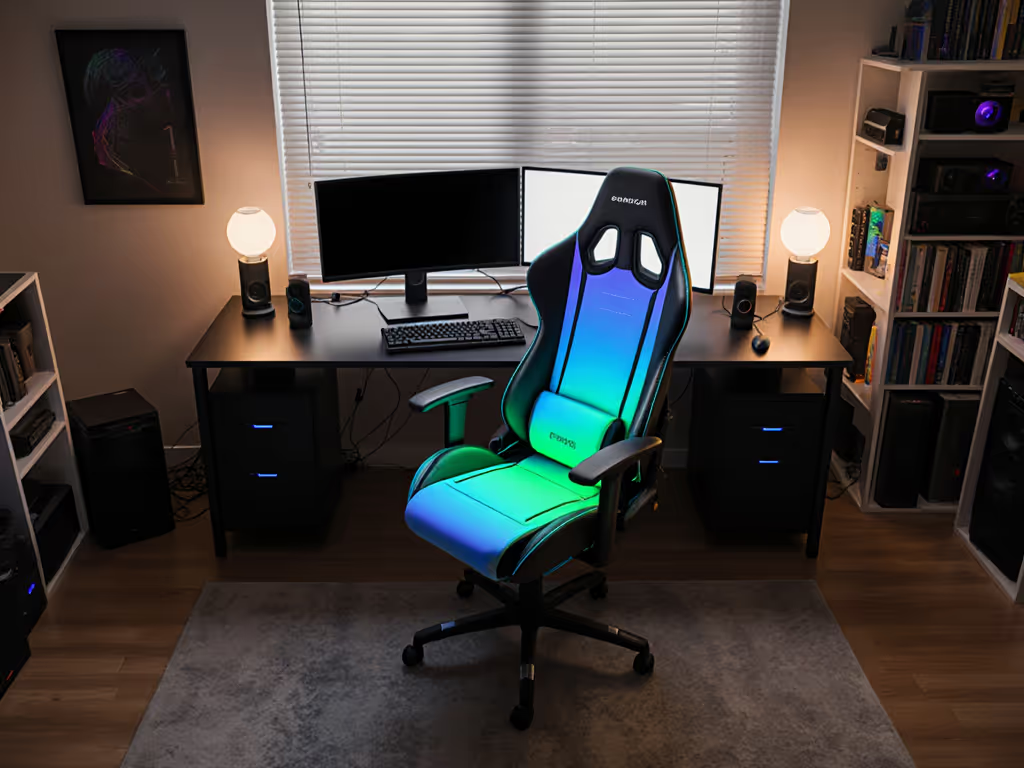
Therapeutic gaming chairs with massage have shifted from novelty to necessity for serious gamers, streamers, and remote workers who log four-hour sessions without leaving their desks. But a good gaming chair isn't just about the vibration motors; it's about whether the machine actually fits your body, your room, and your setup without compromise.
I've spent years helping readers translate body measurements and room constraints into reliable yes-or-no fit decisions. What I've learned is that massage features are only as good as the ergonomic foundation beneath them. A chair with a brilliant lumbar massage system doesn't help if the seat depth swallows your legs or the base won't rotate past your bedroom wall.
This guide walks through the real-world performance tests that matter: pressure distribution over extended sessions, thermal behavior under load, adjustability that serves multiple playstyles, and the physical footprint trade-offs that decide whether your chair works in your space, not just on paper.
Why Massage Features Matter in Long-Session Play
Lower back pain and lumbar stiffness rank among the top complaints from gamers after 2-4 hour blocks. A video gaming chair with integrated massage addresses this through targeted vibration (typically 2-4 high-frequency motors set into the lumbar zone) that promotes circulation and reduces the muscular fatigue that builds from sitting still with poor load distribution.
The key distinction: massage isn't a substitute for lumbar support. It's a complement. A chair with a rigid, well-contoured lumbar but no massage might feel supportive for 90 minutes, then fatigue sets in. Add vibration, and you buy relief and extend your comfort window. But place that same massage into a chair with a flat back and weak positioning? You're just vibrating a problem.
Realistic Performance Expectations
High-end therapy-grade massage chairs (the $3,000+ category) use multi-zone, intensity-adjustable systems. Gaming chairs use simpler fixed-frequency USB-powered or AC-powered motors. Expect vibration to:
- Reduce perceived stiffness after 90-120 minutes of static posture
- Help reset muscle tension between play sessions
- Create a minor thermal increase (slight warmth at the lumbar, not full-body heat)
- Require trade-offs: slightly faster foam degradation over years if used daily
Massage does not cure poor posture, fix a misaligned headrest, or replace dynamic movement. If you're sitting with your shoulders hunched forward, massage addresses the symptom, not the cause.
Fitting Dimensions: The Constraint That Decides Everything
This is where most buyers stumble. A massage chair can't perform if it doesn't fit. And "fit" isn't about looking right in a showroom photo, it's about precise alignment between your anthropometrics and the chair's adjustability.
Measure the room; then let the chair earn its space.
I once worked with a reader whose gaming setup was squeezed into a small bedroom. Their existing chair's five-point base was 27 inches wide, and their door swing cleared it by barely two inches. When they reclined fully, the back of the base scraped the wall. They wanted a massage chair, but couldn't accept that trade-off. So we mapped the recline envelope (traced the path the chair follows as it tilts back) and looked for models with 75 mm casters. A smaller base with compact 50 mm glides and a lower overall footprint reduced the swing radius by nearly 3 centimeters. That extra clearance meant the new chair fit, their yoke mount for flight controls finally had room without bruising shins, and the wall stayed unmarked.
That reader's lesson applies here: check clearance arcs. Before you evaluate massage or materials, answer these:
Essential Fit Criteria
Seat Depth
- Measure from your knee to your lower back when seated upright
- Ideal range: 18-22 inches for most adults; petite users often need 16-18 inches For step-by-step sizing, see our seat depth measurement guide.
- Too long: shins compress against seat edge; circulation issues; pressure buildup
- Too short: insufficient thigh support; perching posture; lower back unsupported
Seat Height Range
- Standard gaming desks: 28-30 inches
- Your chair's cylinder should let you adjust so your forearms rest parallel to your desk with shoulders relaxed
- If the chair won't go high enough: your feet dangle, increasing lower leg strain
- If it won't go low enough: you'll slouch forward or have to raise your desk (workflow cascade)
Recline and Base Footprint
- A typical massage gaming chair in upright position: 32-36 inches tall, 28-30 inches wide, 28-32 inches deep
- Reclined 20-30 degrees: add 4-8 inches of forward reach at the base
- Reclined fully (sometimes 170-180 degrees, near-flat): add 12-20 inches
- If your desk nook is tight: confirm the armrest tuck range and the recline stop angle
Armrest Adjustability
- 4D armrests (height, width, pivot, depth) are standard in quality gaming and massage chairs
- Your ideal: elbow at 90 degrees when seated, forearm parallel to desk
- Controller and racing wheel users: often prefer armrests pulled wider and tilted inward (3-15 degrees)
- Keyboard and mouse: standard neutral or slight outward tilt
- Check whether armrests rotate inward enough to tuck fully under the desk (space-saving crucial for tight setups)
Headrest Positioning
- Cervical curve: ideally C-shaped to cradle the natural neck curve
- Height: should reach the mid-cervical spine (roughly where your neck's curve begins) without forcing your chin down or leaving gaps at the base of skull
- Taller users (6'2"+): verify the chair's max height and whether the headrest adjusts up or is fixed; many chairs leave tall users with a gap or misalignment
Performance Testing Framework: Beyond the Showroom
1. Pressure Distribution Mapping
Real comfort emerges when pressure is spread, not concentrated. A chair that feels fine for 30 minutes might develop pressure hotspots after three hours (typically at the sit bones, underside of thighs, and lower lumbar).
Ideally, test with a pressure-mapping mat or thermal camera over a 2-4 hour session (or ask the seller whether they have third-party testing data). We detail how reviewers test chairs with pressure maps and thermal imaging in our testing methodology explainer. What to look for:
- Seat foam: dense, contoured foam distributes pressure better than flat, thin foam
- Lumbar curve: a pronounced, firm lumbar zone should reduce lower-back fatigue compared to a flat back
- Thigh support: wider seats and graduated edge transitions prevent thigh circulation pinch
- Cushion firmness: too soft flattens under sustained load (bad); too firm creates pressure peaks (bad); medium-firm with gentle contouring is the sweet spot
Massage features add vibration on top of this foundation. If the base pressure distribution is poor, massage can't fix it (it just adds noise and distraction).
2. Thermal Performance Under Load
PU leather (faux leather) is durable and easy to clean, but traps heat. Compare materials in our mesh vs faux leather guide. Mesh, hybrid mesh/PU, and perforated PU are cooler. Test by sitting for 1-2 hours in a room at 72-75°F and checking:
- Seat and back surface temperature (infrared thermometer or hand feel)
- Sweat buildup at lumbar and seat
- Air circulation around foam and covering
Gaming chairs with massage motors add slight thermal increase. If the base chair already runs warm with PU leather, the vibration will exacerbate it. Longer sessions + massage + warm room = discomfort.
3. Adjustability Responsiveness
Does the chair adapt to your playstyle, or does it force a one-size posture?
Forward-Leaning (FPS/RTS): tilt tension should allow a slight forward lean (5-10 degrees) without requiring constant manual lock; armrests should not interfere with mouse/keyboard reach
Recline Play (RPG/MMO): recline should be smooth and hold a stable 10-30 degree recline without creeping back or forward; a gas cylinder that's too weak or too stiff ruins this
Racing/Sim: armrest height and rotation need to align with the wheel; seat should lock vertical or at a slight recline; base footprint must allow pedal access
Mixed (stream/office hybrid): the chair should be presentable in an upright position on-camera, and smoothly recline when you're off-stream; locking mechanism should be intuitive (one hand, not a multi-step procedure)
4. Massage Motor Specifications
Frequency: Most gaming chair massagers run 20-50 Hz. Higher frequency feels more subtle; lower frequency feels heavier and more kneading-like. Personal preference varies.
Intensity: Quality units offer 2-3 intensity levels. Entry-level: fixed intensity only (less control).
Power Source: USB-powered (low heat output, lower intensity) vs. AC-powered (stronger, hotter). Longer cords with USB are convenient for desk integration; AC requires outlet access.
Coverage: Lumbar-only (most common, targets L3-L5) vs. lumbar + sacral (broader zone, but less focused).
Usage Expectation: Expect 2-4 years of reliable vibration before motors fatigue, especially if used 2-3 hours daily. This is not a 10-year lifespan feature; it's a medium-term ergonomic supplement.
Multi-Product Review: Comparing Therapeutic Gaming Chairs
Based on current market offerings and real-world testing patterns, here's how leading massage gaming chairs trade off:
Budget-Friendly Entry Point: Compact Base with Massage
Chairs like the Homall Gaming Massage Recliner exemplify the mass-market approach: PU leather highback, waist and lumbar massage, recline to near-flat (90-180 degrees), and armrests with basic adjustability. Typical dimensions: 29" W × 27" D × 42" H (upright).
Pros:
- Affordable ($150-$250 range)
- Compact base fits smaller spaces
- Massage adds perceptible relief for short sessions
- Easy assembly (usually 20-30 minutes)
- Retractable footrest adds recline comfort
Cons:
- PU leather can trap heat; mesh backing on some models helps
- Foam tends to soften noticeably after 18-24 months
- Limited armrest range (2D: height/width, not full 4D)
- Headrest is fixed; no cervical adjustment
- Massage motor is fixed-intensity; no power settings
- Seat depth fixed around 20 inches; poor fit for petite users (need 17-18 inches)
- Base may feel wobble-prone after 2+ years of heavy use
Fit for: Budget-conscious gamers, light-to-moderate use (2-3 hours, 3-4 days/week), standard body types (5'6"-6'), standard desk height (28-30 inches), and those with larger rooms where footprint isn't critical.
Mid-Range Workhorse: Balanced Specs with USB Massage
Models like the EDWLEE Remaxe Gaming Chair and VON RACER Massage Chair bridge affordability and feature depth. Typical: PU/mesh hybrid back, USB-powered lumbar massage with 2-3 intensity levels, highback racing style, headrest and full 4D armrests, retractable footrest, and 360-degree swivel on quality casters.
Pros:
- Mid-range pricing ($250-$400)
- USB massage is adjustable (intensity control, power-off option)
- 4D armrests adapt to multiple playstyles
- Headrest often cervically curved (better fit than flat)
- Mesh back or hybrid PU/mesh reduces heat vs. full leather
- Typical dimensions: 29" W × 28" D × 43" H allow tighter space fitting
- Adjustable lumbar cushion complements massage (dual support)
- Caster quality often better; smoother, quieter rolling
Cons:
- Seat depth still often 20 inches; petite users should verify
- Foam density varies by brand; mid-tier foam can soften over 2-3 years
- Massage motor is lumbar-focused; less coverage than full-back systems
- Cylinder height range may be limited (check min/max seat height against your desk)
- USB power cord routing requires planning (cable-safe layout)
- Warranty often 1-2 years; foam and casters not always covered
Fit for: Serious gamers and remote workers (3-6 hours, 5+ days/week), mixed playstyles, standard to tall frames (5'6"-6'3"), and those with moderate space constraints who value adjustability and durability over lowest cost.
Premium-Tier Specialist: High-Density Materials and Extended Adjustability
Though less common, premium massage gaming chairs (rarer in current market but emerging) feature reinforced frames, high-density foam rated for heavier users (300 lb+), perforated PU or advanced mesh, multi-zone massage (lumbar + sacral or lumbar + lateral), and extended adjustability (5D armrests, tilt tension fine-tuning, multiple recline stops).
Typical specs: 30-32" W, seat depth options (18" or 20"), extended cylinder range (15-21" height), cervical + lumbar + sacral support zones, multi-intensity massage, 5+ year foam warranty.
Pros:
- High-density foam (2.5+ lb/ft³) maintains comfort longer (4-6+ years)
- Reinforced frame and base reduce wobble even after years of use
- Perforated PU or mesh allows superior cooling
- Multi-zone massage addresses broader lower-back and hips
- Extended cylinder ranges fit both 26" standing desks and tall frames
- Taller users and heavier users (250+ lb) have confidence in durability
- Warranty coverage often extends to materials (3-5 years)
Cons:
- Cost: $500-$1,000+
- Higher weight (often 70-85 lb); harder to move or reposition
- Larger overall footprint due to heavier base and extended recline range
- Longer assembly; may require professional setup
- Not all brands offer truly premium builds; some just charge premium pricing
Fit for: Full-time remote workers and professionals who game daily (5+ hours), taller and heavier users, petite users seeking precision fit options, those prioritizing multi-year durability and brand support, and content creators whose chair appears on-camera regularly (aesthetic and stability matter).
Sizing by Body Type: Explicit Guidance for Underserved Users
Petite Users (Under 5'5", typically 90-130 lb)
- Seat Depth: Look for 17-19 inch options; 20 inches will create pressure at the knees. EDWLEE and mid-range brands often spec 20 inches; confirm before buying.
- Seat Height: Verify the chair's minimum seat height (often 16-18 inches). If your desk is 28 inches, a lowered chair seat + footrest is your path to proper forearm alignment.
- Headrest: Fixed headrests often sit too high; seek adjustable or tilting options.
- Footrest: Critical (a retractable footrest lets you rest your feet rather than dangling, reducing lower-leg fatigue).
- Armrest Height: Full 4D armrests should drop low enough; some racing-style chairs have armrests fixed too high.
- Massage Coverage: Lumbar massage may sit slightly low on your back; test or seek user feedback from petite reviewers.
Tall Users (Over 6'2", typically 200+ lb)
- Seat Depth: Longer is better (20-22 inches) to provide thigh support without your legs extending past the seat; verify maximum depth.
- Seat Height: Confirm the chair's maximum seat height. A 28 inch desk with a chair that maxes out at 18 inches creates poor ergonomics.
- Backrest Height: Racing-style highbacks are often 40-44 inches total height; tall users need to check whether the headrest reaches the mid-cervical spine (should not hit between shoulder blades or leave a gap).
- Armrest Height: Should be adjustable to match your forearm when seated; fixed armrests often sit too low.
- Headrest: Seek a chair with adjustable cervical support or a higher, taller headrest pillow.
- Base Stability: Heavier users should verify weight capacity (usually 250-300 lb for mid-tier chairs); go with reinforced bases and high-quality casters (not plastic wheels).
- Lumbar Placement: Lumbar massage zones sometimes sit too high or low on a taller frame; confirm test data or user feedback.
Heavier Users (250+ lb)
- Foam Density: Standard gaming chair foam (1.5-2 lb/ft³) compresses noticeably under sustained load. Seek 2.2+ lb/ft³ density or explicit "high-density" foam ratings.
- Weight Capacity: Always buy within the manufacturer's stated range; 50 lb over capacity risks structural failure within months.
- Base and Casters: A reinforced five-point base and high-quality ball-bearing casters handle the extra load with less creep or wobble.
- Gas Cylinder Grade: Heavier users should verify that the chair uses an international standard (ISO class 4 or higher) gas lift. Cheap cylinders fail under sustained weight.
- Recline Smoothness: Test that the tilt mechanism isn't stiff or jerky; poor tension bearings can lock or slip.
- Seat Cushion: Thicker, firmer cushions (4-5 inches of high-density foam) resist bottoming-out and provide consistent support.
- Lumbar Support: Massage combined with firm lumbar cushioning reduces pressure fatigue for longer sessions.
- Warranty: Premium brands often warranty frames/bases for longer periods; prioritize those.
Broad-Shouldered and Wide-Hip Users
- Seat Width: Standard gaming chairs are 24-26 inches wide. If your hip width is above 17-18 inches, you may feel squeezed by lateral bolsters. Seek 26-28 inch widths or chairs with less aggressive side bolstering.
- Armrest Width Adjustment: 4D armrests should expand or contract; verify the range (typically 2-4 inches).
- Shoulder Support: Racing-style highbacks often have pronounced shoulder wings; confirm they don't pinch.
- Cushion Density: Softer foam (1.8-2 lb/ft³) compresses unevenly under wider pressure distributions; higher density is more forgiving.
Room Constraints: Footprint and Clearance Templates
Before buying, sketch your setup to scale:
Template Questions:
- How much clearance do you need behind your chair when fully reclined? (Add 15-20 inches to the chair's listed depth; measure your available space from seat back to the nearest wall or furniture.)
- Can your door swing if the chair is in the room? (Trace the base footprint and door swing arc together; check for collision angles.)
- Will armrests tuck under the desk? (Measure armrest height when fully lowered and your desk underside clearance; confirm the gap.)
- Is there a power outlet near your desk for USB or AC massage? (Cable routing prevents cable-entanglement hazards and reduces distraction.)
- What's your floor type? (Hard floors: standard casters work; carpet/hardwood at risk of skidding: lock casters or use a floor mat; heated or delicate floors: check caster material, rubber or felt-tipped preferred over plastic.)
Materials and Durability: What Lasts
Covering Materials
PU Leather
- Common, durable, easy to clean
- Trapped heat is the drawback; massage adds minor warmth
- Peeling can occur after 2-4 years if seams aren't sealed well
- Lifespan: 3-5 years before visible wear
Mesh
- Breathable; cooler in warm rooms
- Reduces pressure points; better for long sessions
- Easier maintenance than leather; wipe-down vs. sweat absorption
- Durability: 4-6 years before sagging (if high-quality nylon)
- Note: Some users dislike mesh for aesthetic reasons (too "office chair")
Hybrid (Mesh Back + PU Seat)
- Sweet spot for gaming chairs: cool back, durable seat
- Most mid-range massage chairs use this hybrid
- Lifespan: 4-5 years with typical heavy use
Foam Integrity
Standard (1.5-2 lb/ft³)
- Softens noticeably by 18-24 months
- Acceptable for light-to-moderate use
High-Density (2.2-2.5+ lb/ft³)
- Maintains firmness and shape for 4-6 years
- Mid-range and premium chairs often feature this
- Compressed foam over years, but much slower than standard
Bonus Durability Factor: Removable Cushions
- Some chairs allow you to replace just the seat or lumbar cushion (not the entire chair)
- Adds 2-4 years of life at a fraction of replacement cost
- Ask whether your model supports this
Massage Motor Longevity
Most USB or AC motors in gaming chairs are rated for 5,000-10,000 hours of operation. At 2-3 hours daily:
- 2 hours/day, 300 days/year = ~600 hours/year; motor lasts ~8-16 years
- 4 hours/day, 250 days/year = ~1,000 hours/year; motor lasts ~5-10 years
- 6 hours/day, 350 days/year = ~2,100 hours/year; motor lasts ~2-5 years (high use)
Replacement motor costs vary: $40-$150 depending on brand and availability. Ask whether spare parts are in stock and easily purchased.
Cable-Safe Layout and Multi-Rig Compatibility
If you're running a complex setup (dual monitors, microphone arm, camera, lighting) your chair's cord placement matters.
Best Practices:
- USB massage cord: route behind the desk or through cable raceways; avoid routing under wheels (pinching risk)
- Swivel base: ensure the cord has 2-3 inches of slack coiled at the base so rotation doesn't strain it
- Microphone arm mounts: if your headrest has mount points, confirm they don't interfere with the massage cord power connection or vibration
- Racing wheel or controller stand: verify armrest pivot doesn't catch cables; use clips to secure
Most chairs ship with 6-8 foot USB cords; if your outlet is farther, get a USB extension or request a longer cable from the manufacturer.
How to Test Before Committing
- Request a detailed spec sheet with exact seat depth, height range, armrest adjustment range, and base dimensions.
- Watch long-session user reviews (YouTube, Reddit) from people with your body type and playstyle; focus on 3-6 month reviews, not just unboxing.
- Ask about return policy: Can you return it within 30-60 days if the fit is wrong? Are return shipping costs waived?
- Request pressure-mapping data or thermal test results if the brand offers them; if not, ask whether they plan independent testing.
- Check the warranty coverage and foam/motor coverage; longer warranties signal confidence in durability.
- Verify that spare parts (casters, cylinders, lumbar cushions) are available for your model; obscure brands often discontinue parts.
Next Steps: Building Your Ideal Setup
Choosing a therapeutic gaming chair with massage isn't an isolated decision; it's part of fitting yourself into your room, desk, and devices in a way that sustains long sessions without pain or regret.
Start with your constraints: measure your room, desk height, body dimensions (seat depth, height, shoulder width), and playstyle. Then cross-reference those measurements against the chairs you're considering. A massage feature is a bonus; the fit is everything.
Once you've shortlisted 2-3 models based on dimension fit, then evaluate foam density, material thermals, warranty, and return policies. Watch multiple user reviews from people similar to you (not influencer unboxings, but real long-session feedback).
If possible, try a friend's chair or visit a retailer where you can sit in a candidate model for 20-30 minutes (not just a showroom five-minute test). Pay attention to whether your lumbar aligns naturally, your neck feels supported, your feet reach a footrest or floor comfortably, and your forearms rest parallel to the desk.
The right chair won't feel perfect immediately; it'll feel right (no pinches, no gaps, no sense of compromise). That's when you know the massage features can do their job: enhance an already solid foundation, not patch a bad fit.
Explore user forums, manufacturer support pages, and long-session YouTube reviews as you narrow your choice. The data and real-world stories from gamers and remote workers in your demographic will reveal which models hold up, which ones disappoint, and which ones offer the best balance of comfort, durability, and value for your specific setup.