When you're investing in a gaming chair, you're not just buying a seat, you're purchasing performance, comfort, and potentially thousands of hours of gameplay. But how do you know what your chair depreciation analysis should look like over time? Unlike regular furniture that simply loses value, a gaming chair's worth is deeply personal and tied to how well it fits your body and gaming habits. Start with your measurements; let specs narrow the field. I've seen too many gamers swap chairs like band-aids, trying to fix discomfort that could've been avoided with proper sizing upfront. Comfort isn't subjective, it is data-driven.
As someone who measures bodies first and chairs second, I've learned that understanding how gaming chairs depreciate requires looking beyond standard furniture depreciation tables. Your body dimensions and gaming posture dramatically impact how long a chair maintains its value for you. Evaluate your premium chair investment value through the lens of personalized fit, durability, and measurable comfort that lasts.
1. How Gaming Chairs Differ from Traditional Furniture
Standard furniture depreciation calculators often show sofas losing about 30% value in year one and around 45% by year three. But gaming chairs aren't couches, they're performance equipment with specialized components that wear differently. While office chairs might follow a 7-year IRS depreciation schedule, gaming chairs experience more intense, repetitive use patterns. To decode how foam density (ILD) affects long-term support and depreciation, see our foam density guide.
Comfort is data, your body's interaction with the chair determines its true depreciation rate.
Unlike living room furniture that sits mostly static, gaming chairs endure:
Dynamic pressure shifts: Constant leaning, tilting, and micro-movements during gameplay
Thermal stress: Heat buildup from extended sessions affects foam integrity
Adjustment wear: Armrest mechanisms and tilt tension systems get used dozens of times per session
This means a chair's value isn't just about resale price, it is about how well it maintains ergonomic support over time. For gamers who've experienced leg numbness in hour two (like I did before I measured my inseam), a chair that loses lumbar support at 18 months isn't just depreciating, it is failing its core purpose.
2. Measuring Your Personal Depreciation Curve
Most depreciation guides focus on time-based value loss. But for gaming chairs, your body measurements define how quickly the chair's functional value declines for you.
When I finally measured my thigh length, inseam, and shoulder breadth rather than guessing, I discovered why my previous chairs failed me. A seat with a rounded front, 2 cm more height, and a taller back wasn't just more comfortable, it prevented the pressure points that made my chair depreciate in usefulness long before its physical components wore out.
Your personal depreciation factors: If seat depth is your main pain point, our seat depth fit guide shows how to measure and match depth to your body.
Seat depth mismatch: Too deep = thigh pressure that degrades comfort value fast
Inadequate backrest height: Forces unnatural posture that makes the chair fail sooner
Poor cylinder range: Inability to align with desk height creates postural strain that feels like chair failure
The chair doesn't depreciate, it was never correctly specified for your biomechanics. Define fit using your body landmarks, not marketing terms.
3. Premium Chair Investment Value: Beyond the Initial Price
That $700 chair isn't necessarily a better investment than a $300 model if it doesn't match your anthropometrics. Premium chair investment value comes from three factors that standard depreciation calculators ignore:
Adjustment precision: Chairs that can be fine-tuned to your measurements maintain value longer
Material resilience: Breathable fabrics and cold-cure foam resist performance degradation
Inclusive sizing: Models built for diverse body types have lower functional depreciation
I prefer models with inclusive sizing, open seat fronts, and multiple cylinder options because they accommodate changing body needs over time. A chair that fits you perfectly today but can't adapt as your posture changes will depreciate faster in utility, even if the physical components remain intact.
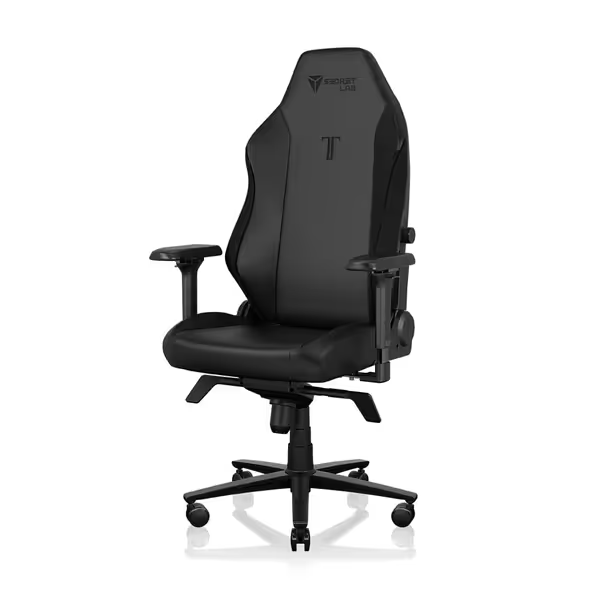
Let's analyze this premium model through our measurement-first lens. The Secretlab Titan Evo XL targets users 5'11"-6'9" (175-395 lbs) (a range that accommodates body diversity better than most competitors). But does that translate to better long-term value?
Key value retention factors:
Cold-cure foam construction: Resists the flattening that plagues standard foam chairs (a major depreciation factor)
4D armrests with replaceable tops: Critical for maintaining adjustment precision as components wear
Magnetic head pillow system: Easily replaceable without replacing the entire chair
12x more durable leatherette: Slows material degradation that drives standard depreciation
For taller users (>6'2") or broader-shouldered gamers, this chair's premium investment value shines because it addresses common fit issues that make other chairs depreciate rapidly in usefulness. The 5-year warranty aligns with its slower functional depreciation curve (but only if you're within its size range). For petite users (<5'5"), seat depth may cause rapid depreciation of comfort value despite the chair's physical durability.
5. Razer Iskur V2 X: Value Engineering for Diverse Bodies
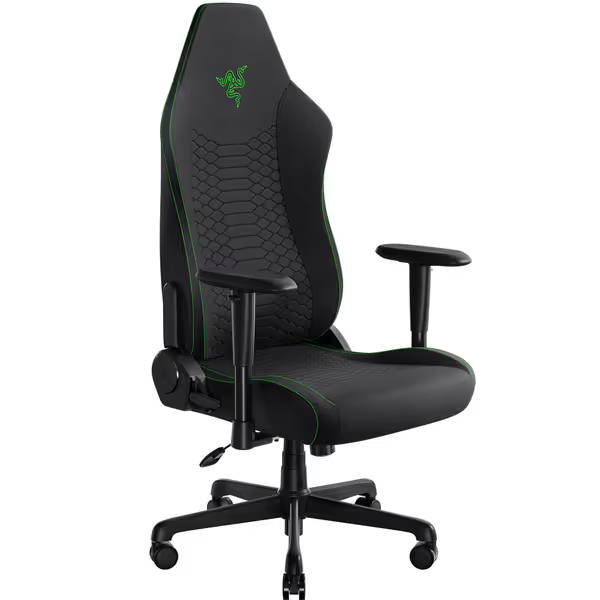
Razer Iskur V2 X
Ergonomic gaming chair with built-in lumbar support for long session comfort.
Wider seat with plush fabric reduces pressure & heat.
Cons
2D armrests may rotate too easily during use.
Customers find the gaming chair well-built, comfortable, and easy to assemble, with good back support including built-in lumbar support. The appearance receives positive feedback, with one customer noting it's stylish without sacrificing breathability.
Customers find the gaming chair well-built, comfortable, and easy to assemble, with good back support including built-in lumbar support. The appearance receives positive feedback, with one customer noting it's stylish without sacrificing breathability.
At less than half the price of premium models, does the Razer Iskur V2 X offer comparable investment value? Let's evaluate through our measurement lens.
Depreciation-resistant features:
Widened seat base with reduced edges: Minimizes thigh pressure points that accelerate functional depreciation
Breathable multi-layer fabric: Resists heat buildup that degrades foam in PU leather chairs
Integrated lumbar support: Eliminates a separate pillow that often gets lost or flattened
152-degree recline: Maintains value for both intense gaming sessions and RPG/MMO relaxation
The Razer's value proposition centers on preventing the rapid depreciation caused by poor pressure distribution. For users between 5'4"-6'0" (up to 299 lbs), its widened seat base solves the too-narrow problem that makes many chairs depreciate quickly in comfort. However, its 2D armrests (vs. 4D on Secretlab) mean less precision tuning, potentially faster depreciation for users with unusual desk heights or shoulder widths.
6. Chair Trade-In Options: When Functional Depreciation Outpaces Physical Wear
Unlike standard furniture, gaming chairs often become obsolete before they're physically worn out, typically because they never fit properly. Smart chair trade-in options recognize this reality.
Maximizing residual value:
Brand trade-in programs: Some manufacturers take older chairs toward new purchases (valuing functional life over physical condition)
Gamer-focused marketplaces: Platforms that value adjustment functionality over cosmetic perfection
Component replacement: Replacing foam pads or armrest covers can reset the depreciation clock
When I measured my body properly and matched it to chair specs, I stopped trading chairs every six months. My current chair? Three years old with only armrest covers replaced, its functional value hasn't depreciated because it was correctly sized from day one.
7. Calculating Your Personal ROI Through Body Metrics
Forget standard depreciation tables. Your gaming chair ROI depends on:
Body Metric
Under-Sized Chair Depreciation
Correctly-Sized Chair Depreciation
Seat Depth
40% loss in year 1 (thigh pressure)
10% loss (even wear)
Backrest Height
60% loss by year 2 (posture strain)
15% loss (proper support)
Seat Width
50% loss in year 1 (hip compression)
8% loss (optimal pressure distribution)
This explains why two identical chairs can have vastly different depreciation curves, one for a 5'2" user in a standard size, another for a 6'4" user in XL. Measure your inseam, thigh length, and shoulder breadth first. Then calculate how many gaming sessions you'll get before functional depreciation makes swapping necessary.
8. Future-Proofing Against Depreciation
The smartest gamers minimize depreciation through preventative measures:
Seasonal adjustments: Change cushion firmness and tension as your body changes
Component upgrades: Replace foam or fabrics before complete failure
Measurement tracking: Retest your dimensions annually to ensure continued fit
That chair you bought three years ago isn't worn out, it might just need an armrest height adjustment as your desk setup changed. Comfort is data that evolves with you. Regular measurement updates prevent premature functional depreciation.
9. Making Your Decision: Investment Value Shortlist
Rather than comparing prices, build your shortlist using these depreciation-resistant criteria:
Body measurement alignment: Does it accommodate your specific inseam, shoulder width, and thigh length?
Adjustment granularity: Can you fine-tune within your body's tolerance range?
Component replaceability: Which parts can be swapped without replacing the whole chair?
Material resilience: How does it handle heat and pressure over time? Also factor in warranty coverage to protect value over the ownership period.
Size inclusivity: Does the manufacturer offer multiple sizes without design compromises?
Offer ranges, not absolutes. Your perfect chair exists within a narrow band of specifications tied to your measurements. Explain trade-offs plainly: a wider seat might sacrifice lateral support, higher backrests may not fit under some desks.
Conclusion: Your Body Dictates the Depreciation Curve
Gaming chair depreciation isn't about time, it is about how well the chair maintains its functional value for your specific body. Standard furniture depreciation tables miss this critical dimension. When you understand your measurements and how they interact with chair specs, you transform unpredictable chair shopping into a predictable investment strategy.
I used to swap chairs like band-aids until I measured what actually mattered. Now I know exactly which features prevent rapid depreciation for my body type. Your gaming chair's value isn't determined by its price tag or brand prestige, it is defined by how precisely it matches your anthropometrics and gaming posture.
Comfort is data and data doesn't lie. Start measuring today, and you'll find chairs that maintain their value through hundreds of sessions, not just a few months.
Learn how a $250 gaming chair performs in long sessions: fabric stays cooler than leatherette, ergonomics suit 165–190 cm users, with open, stable seating.
Learn to assess massage gaming chairs by measuring fit, mapping pressure and heat, checking adjustability and footprint, and matching specs to your space.
Get evidence-backed picks for elderly gamers: learn which specs truly support long sessions, compare cost-per-hour, and avoid durability and warranty pitfalls.
Learn how to choose and transport a pink gaming chair that fits car trunks and tight LAN spaces, with precise measuring, clearance arcs, and quick disassembly.