Gaming Chair Ergonomics: BIFMA Certification Explained
By Linh Vo • 11th Oct
Measure twice, sit once. As a setup planner specializing in footprint constraints and recline envelopes, I've seen how gaming chair ergonomics make or break your session (not just for your spine, but for your entire room ecosystem). Too many gamers sacrifice space compatibility for flashy promises, only to battle wobbly bases or clipped door swings by week two. Today, we'll demystify BIFMA certification, not as a marketing trophy, but as a practical tool to verify whether a gaming chair earns its place in your battle station. Spoiler: It's about far more than just durability tests; it's about translating lab results into real-world clearance zones and recline safety. Let's cut through the jargon.
Measure the room; then let the chair earn its space.
Why Gamers Should Care About ANSI/BIFMA X5.1 (Beyond the Buzzwords)
"Isn't BIFMA just for office chairs? Why does it matter for gaming?"
Great question. While ANSI/BIFMA X5.1 was built for 9-to-5 office use, its tests directly address gaming chair safety tests that matter more for marathon sessions. Think: tilt mechanism failures during aggressive leans, casters snapping under sudden weight shifts, or seat foam collapsing after 200 hours of micro-movements. Unlike brief office sits, gaming demands dynamic postures (forward-leaning aim stances, full reclines for cutscenes), putting uneven stress on every component. A chair passing ANSI/BIFMA X5.1 proves it handles repeated stress cycles (e.g., 12,000+ seat drops) without compromising structural integrity. For streamers logging 8+ hours daily, this isn't just compliance, it's injury prevention.
"What do these tests actually do? Translate lab specs to my living room."
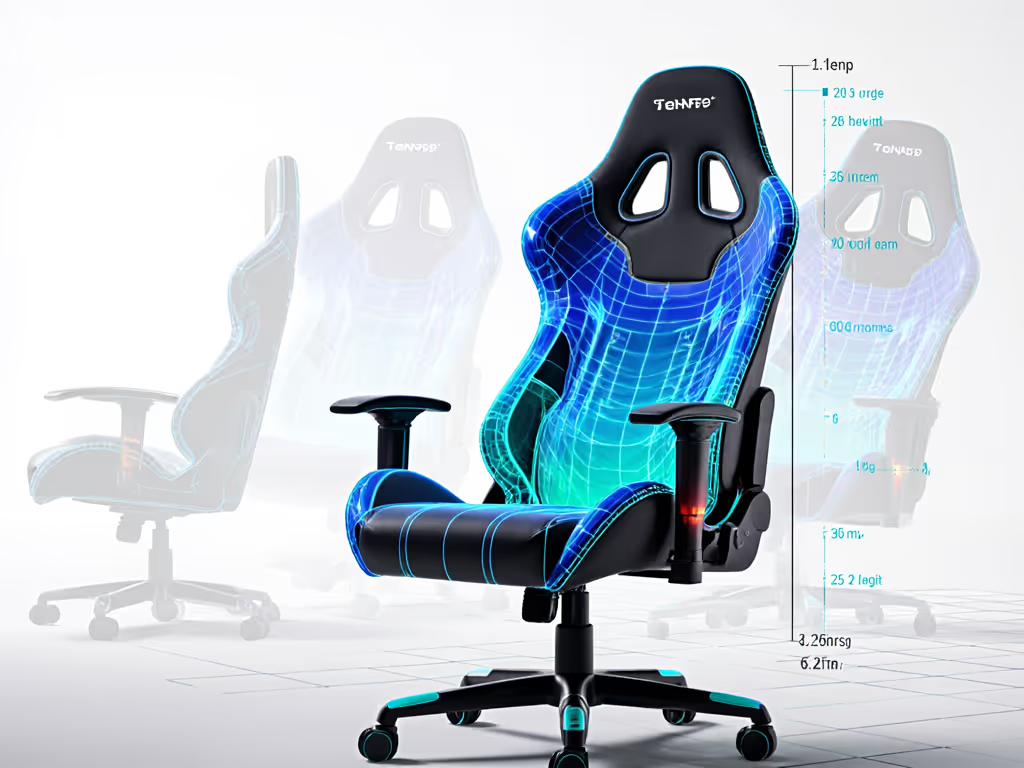
Let's convert those acronyms into clearance decisions. ANSI/BIFMA X5.1 mandates 12 critical protocols, but three directly impact gaming setups:
- Base Stability Test: Simulates corner tipping during reclines. Your take? If your chair's footprint exceeds your desk's clearance zone (e.g., >28" radius), failing this test means your base snags keyboard trays. Compact bases (like Secretlab's TITAN Evo with 27" diameter) clear tighter spaces, but verify compliance to avoid "recline envelope" collisions.
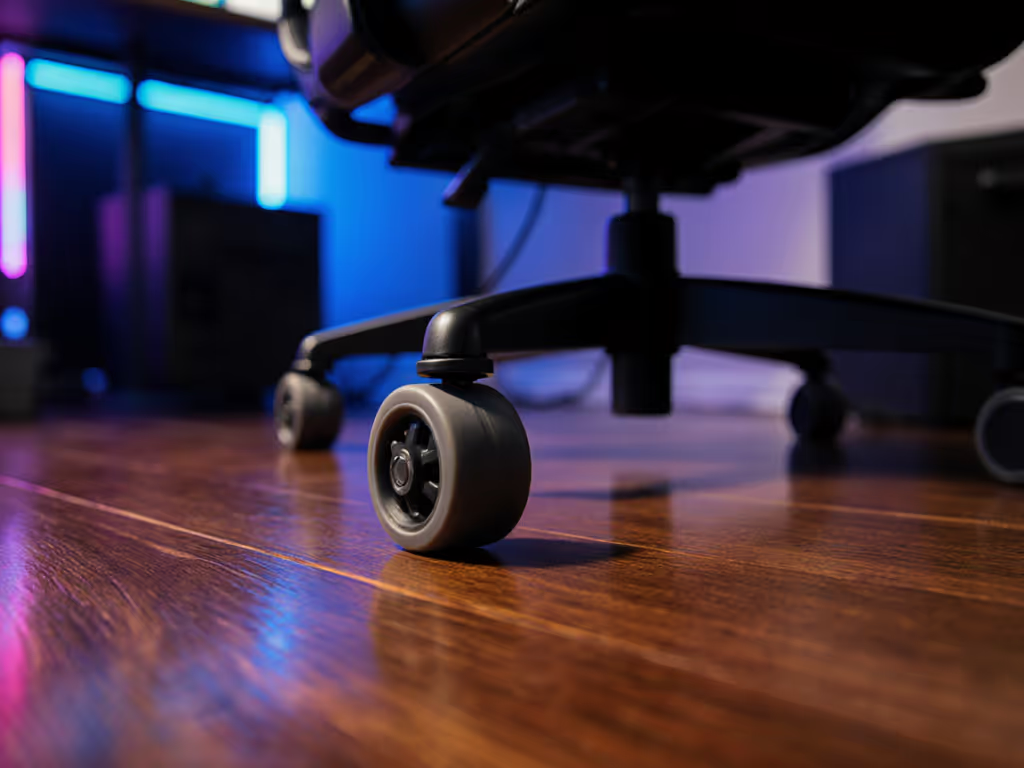
- Caster Durability Test: Rolls casters 10,000+ times under load. Your take? 60mm casters often fail here on hard floors, causing micro-squeaks that ruin stream audio. Certified chairs use hardened nylon (passing 75mm caster tests) for silent, smooth travel (critical for apartment dwellers).
- Backrest Strength Test: Applies 200+ lbs of force to lumbar zones. Your take? This isn't just "support"; it ensures your recline angle won't snap during intense leans. If your chair lacks this, leaning forward to clutch a headshot could mean metal fatigue (and costly replacements).
Fun fact: Secretlab's TITAN Evo undergoes double the ANSI/BIFMA X5.1 cycles for casters and tilt mechanisms, partly why it's trusted in esports arenas where 24/7 use is non-negotiable.
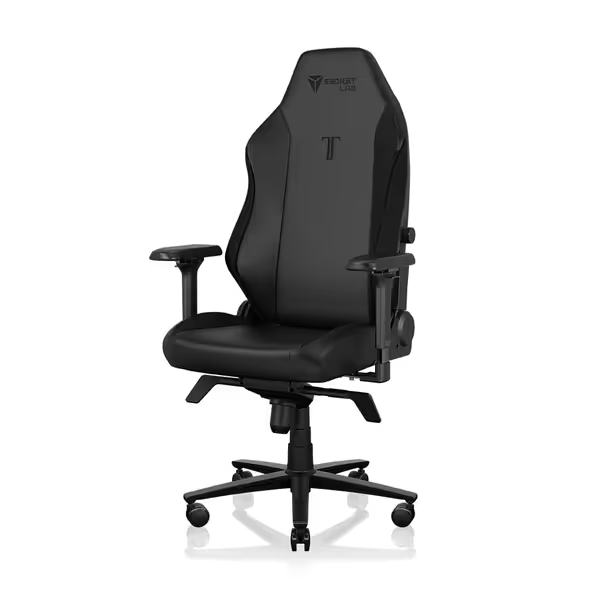
Secretlab Titan Evo Black Gaming Chair
Personalized ergonomic comfort for long gaming and work sessions.
$729
Weight CapacityUp to 395 lbs
Weight CapacityUp to 395 lbs
Pros
Precise ergonomic adjustments: 4D armrests, 4-way lumbar, 165° recline.
Engineered for durability: 12x stronger leatherette, 5-year warranty.
Cons
Firmness may not suit all preferences.
Well-built and comfortable for hours; easy assembly and great adjustability.
Well-built and comfortable for hours; easy assembly and great adjustability.
"How does this help me avoid the 'door-swing disaster'?"
Ah, the classic clipped-door trauma. I once helped a streamer whose chair base clipped their bedroom door every morning during reclines. We didn't just "pick a chair"; we mapped their room's swing radius, traced the chair's recline envelope, and cross-checked it against BIFMA's stability test parameters. Swapping 75mm casters for 50mm glides (tested under caster durability protocols) reduced the footprint by 3 cm. Pair that with a compliant compact base? Zero door collisions. Gaming chair ergonomics must coexist with your room's geometry, not force you to rearrange everything.
"Do 'BIFMA-certified' claims guarantee fit for my body?"
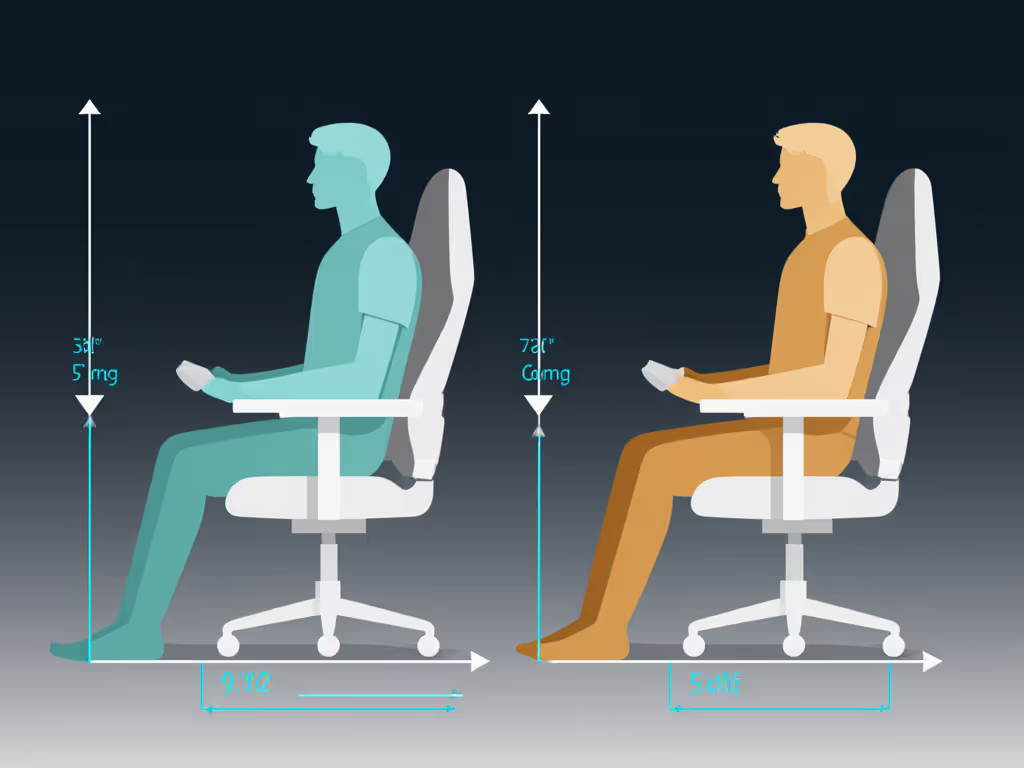
No, and this is where marketers mislead. BIFMA compliance confirms structural durability, not anthropometric fit. A chair can pass ANSI/BIFMA X5.1 yet fail a 5'2" gamer with seat depth too long for their legs. Always pair certification checks with:
- Your seat depth: Measure thigh length + 1" clearance. If >20", standard chairs (18-19" depth) will cut circulation.
- Your recline envelope: Trace your max lean angle on paper, does it clear walls/doors by 4"?
- Your floor type: Hard-surface casters fail BIFMA tests on carpet; verify "tested for [your floor]" in specs.
The Gamer's Checklist: Spotting Real Compliance (Not Just Marketing Fluff)
"How do I know if a brand's 'BIFMA certified' claim is legit?"
Red flag: "BIFMA certified" is technically impossible. BIFMA doesn't certify; they publish standards. Legit brands say "ANSI/BIFMA X5.1 compliant" and provide:
- Test lab reports (e.g., SGS, Intertek)
- Specific test results ("Passed 12,000 tilt cycles at 300 lbs")
- Compliance scope ("Meets X5.1 for casters and stability")
Skip chairs claiming "BIFMA certified" with no documentation. Those often omit critical tests like seat drop impact, where foam compression during rapid sits causes long-term discomfort.
"Should I look for other certifications beyond ANSI/BIFMA X5.1?"
For gaming? Prioritize these:
- EN 1335-2: European standard for seat/back dimensions. Ensures lumbar support aligns with spinal curves, not just "marketing height."
- BS 5852/TB-117: Fire safety. Crucial for dense foams that trap heat during 4-hour sessions.
- FNEW-83-269E: Only if you game 12+ hours daily. This 24/7 standard demands 3x more stress cycles than X5.1. Overkill for most, but vital for esports pros.
Pro tip: If a chair passes EN 1335-2 and ANSI/BIFMA X5.1, its lumbar support geometry is validated for 95% of body types. No more "one-size-fits-all" pain points.
Your Action Plan: From Spec Sheets to Sustainable Comfort
- Map your room first: Use painter's tape to outline your desk's clearance zone. Recline your current chair, does it stay inside? If not, prioritize chairs with documented compact footprints.
- Cross-check test claims: Demand proof of ANSI/BIFMA X5.1 compliance for casters and stability. If a brand hides reports, assume worst-case durability.
- Calculate your recline envelope: For chairs with 150°+ recline, add 6" to the base radius. Will it clear your walls? If not, skip it, no matter the "ergonomic" claims.
Remember: gaming chair ergonomics aren't just about your body, they're about how the chair moves with your space, devices, and daily rituals. That Secretlab TITAN Evo's 4D armrests mean nothing if its base obliterates your cable management. Measure twice, sit once. Because the best chair isn't the fanciest one, it's the one that earns its space in your ecosystem without compromise.
Related Articles
Ownership & Care: Maintenance, History & Longevity
Shared Space Gaming Chair Hygiene Guide
Learn a performance-first cleaning protocol for shared gaming chairs to protect posture, stabilize contact points, reduce fatigue, and extend chair life.